From the vineyard to bottling, each step is carried out with meticulous care, with the same attention paid to the smallest detail. A commitment passed down since 1962, dedicated to our Haut-Médoc and Saint-Estèphe terroirs.
An Exceptional Terroir
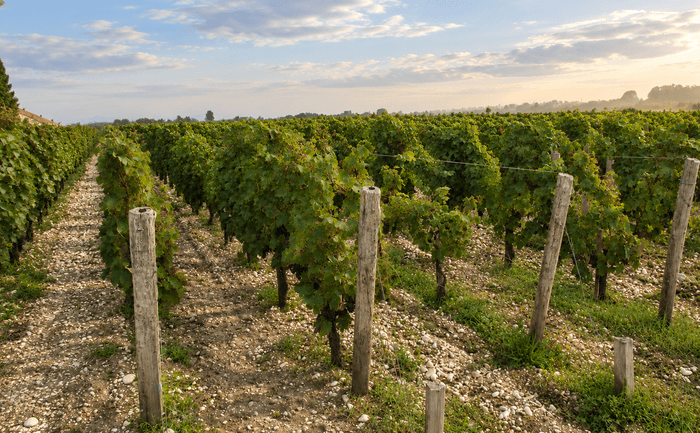
Our vines stretch across the communes of Saint-Estèphe and Vertheuil, its immediate neighbor, in the northern Médoc vineyard. In Vertheuil, Château Le Meynieu occupies a clay-limestone plateau. On the Saint-Estèphe plateau, Lavillotte rests on gravel with a stony subsoil, and La Ronceray on clayey gravel.
On these naturally well-drained soils, the vines root deeply. Each of our wine estates thus draws a unique character from its soil: Château Le Meynieu, a round and charming wine; Château Lavillotte, a powerful and complex wine; Domaine de la Ronceray, a structured and generous wine.
THE VINE
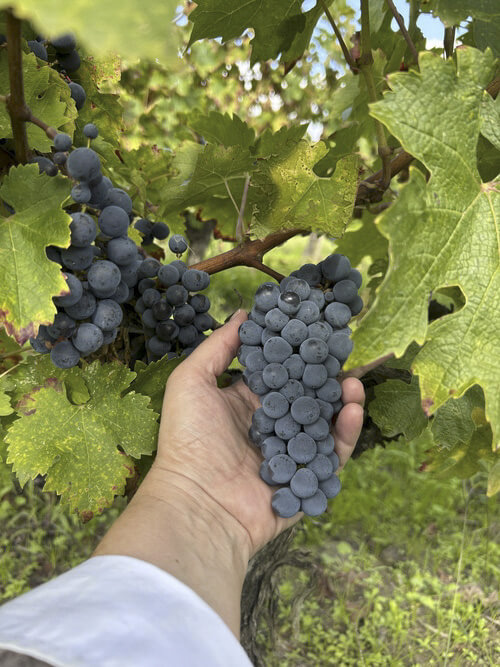
It all begins in the vineyard. From winter pruning to harvest, each plot is closely monitored, and our interventions adapt to the conditions of each vintage.
As harvest approaches, the berries are tasted daily. The harvest date is set plot by plot, to pick each grape variety at its optimal ripeness.
Since 2021, all three of our properties have been certified High Environmental Value. This approach involves the entire estate: biodiversity preservation, reasoned management of interventions, and respect for the vineyard’s natural balance.
Winemaking
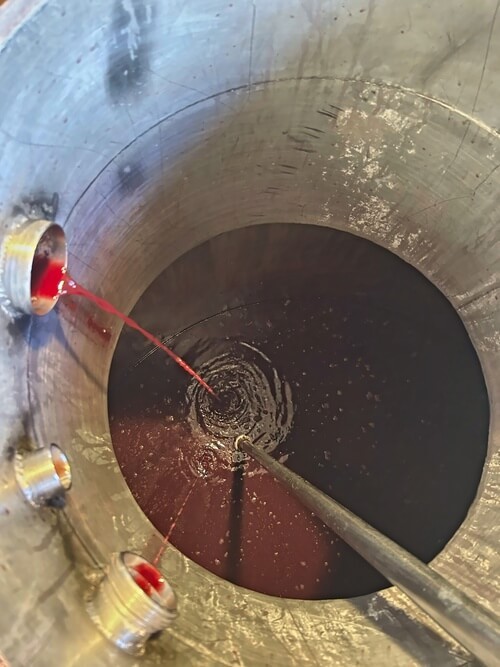
Once in the vat room, the grapes are sorted on a table, then each grape variety and each plot are vinified separately. This plot-by-plot vinification allows us to monitor each vat closely and preserve the unique expression of each terroir.
During alcoholic fermentation and maceration, we favor slow extraction, adjusting temperatures and vatting time according to the profile of each batch. This allows us to obtain color, aromas, and fine tannins, without ever forcing the fruit.
The wine then undergoes malolactic fermentation, which softens its structure. Year after year, our quest remains the same: balance and precision.
Barrel Aging
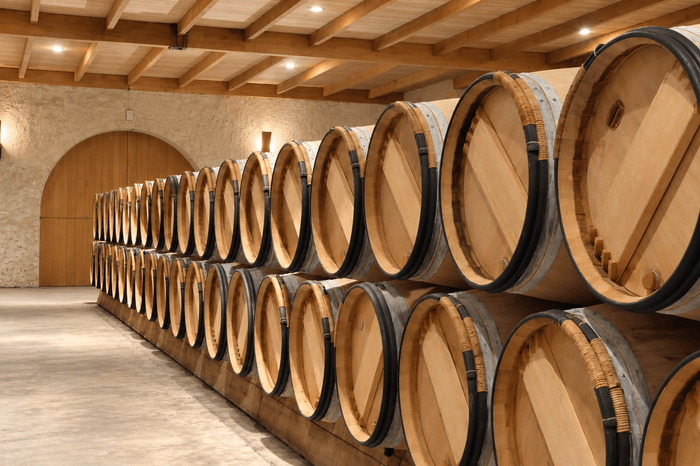
Our wines then rest for 12 months in oak barrels from renowned cooperages, in the air-conditioned cellar built by Jacques Pedro in 1974.
At a constant temperature, each barrel is monitored and tasted regularly throughout the aging process.
Each year, approximately 30% of the barrels are renewed: just enough for the wood to accompany the wine, refine its tannins, and extend its aging potential, without ever dominating it.
12 months
of aging in oak barrels
30%
of barrels renewed each year
At the Château
bottled by us
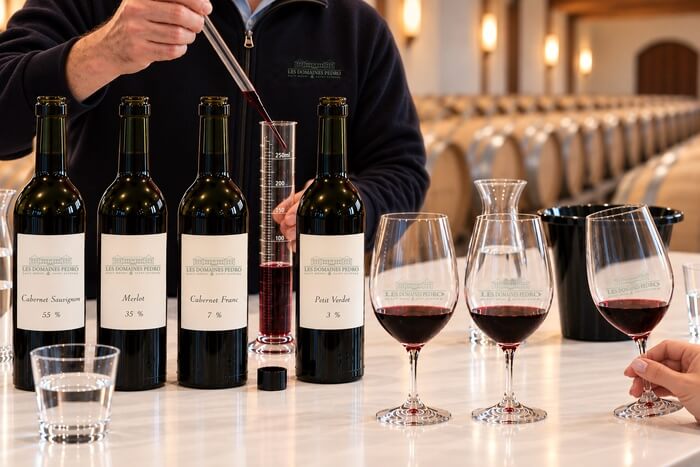
The Blending
Once in the vat room, the grapes are sorted on a table, then each grape variety and each plot are vinified separately. This plot-by-plot vinification allows us to monitor each vat closely and preserve the unique expression of each terroir.
During fermentation and maceration, we ensure controlled extraction to reveal the full richness of the fruit, the intensity of the aromas, and the finesse of the tannins.
The wine then undergoes malolactic fermentation, which softens its structure. Year after year, our quest remains the same: balance and precision.
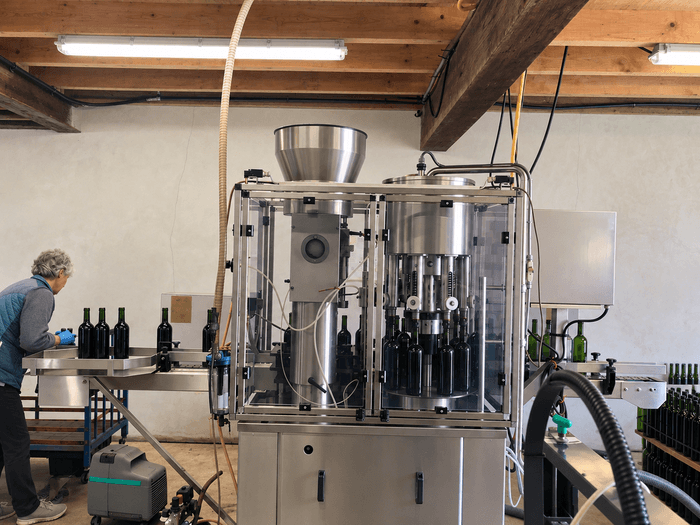
Bottling
Our wines then rest for 12 months in oak barrels from renowned cooperages, in the air-conditioned cellar built by Jacques Pedro in 1974.
At a constant temperature, each barrel is monitored and tasted regularly throughout the aging process.
Each year, approximately 30% of the barrels are renewed: just enough for the wood to accompany the wine, refine its tannins, and extend its aging potential, without ever dominating it.
From vine to bottle, every action pursues a single goal: for our wines to faithfully express their terroir.